RFID Jewelry Tags: How RFID Tracking Works in a Jewellery Store
Counting a showcase of rings one tag at a time is slow, and in gold, slow counting means grams go untraced. RFID jewelry tags fix that: instead of scanning each piece in line of sight, a reader picks up dozens of tags at once — a whole tray in a single wave. This guide explains what RFID jewelry tags are, how an RFID tracking system works end to end, how it compares to barcodes, and where it actually earns its cost in a jewellery store.
What are RFID jewelry tags?
An RFID jewelry tag is a tiny label — often a barbell or hangtag sized for jewellery — containing a microchip and a printed antenna. The chip stores a unique ID that links to the item's record in your software: SKU, gross/net weight, purity, making charge, price and location. Unlike a barcode, it doesn't need to be seen to be read; a radio signal from a reader powers the chip and reads its ID from a few centimetres to a couple of metres away. In practice that means you can read a tray of tagged pieces without touching or aligning a single one.
How an RFID jewelry tracking system works
RFID for jewellery is a chain of four parts working together:
- The tag — attached at intake, carrying the item's unique ID and (in the software) its full weight, purity and price record.
- The reader — a handheld wand or a fixed pad/tunnel that emits a radio field and captures every tag ID in range at once.
- The antenna — built into the reader, shaping how far and wide it reads (a benchtop pad for tray counts, a wider field for a display case).
- The software — the RFID jewelry tracking system itself, matching scanned IDs against expected stock, so a count, a sale or a transfer updates inventory by weight and piece instantly.
The workflow is simple: tag every piece once at intake, then wave the reader over a tray, drawer or showcase. The system compares what it read against what should be there and flags anything missing or extra — a full reconciliation in the time it used to take to count one shelf.
Barcode vs RFID for jewelry
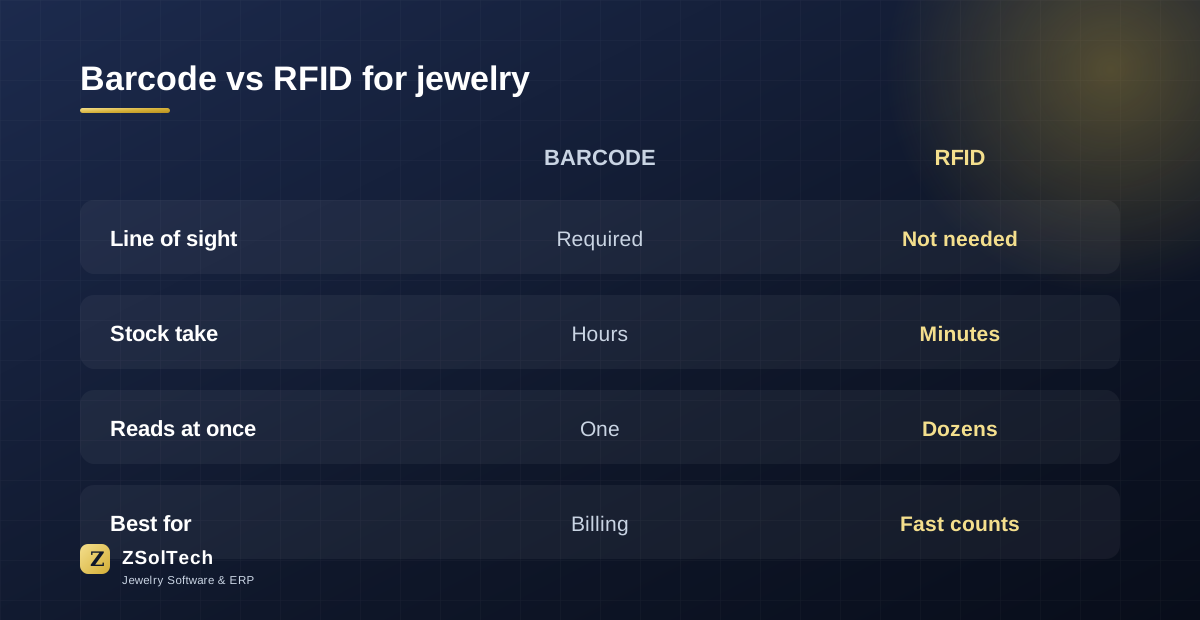
This is the real question most jewelers are asking. Both have a place — the honest comparison:
| Barcode | RFID | |
|---|---|---|
| Line of sight | Required — scan each tag | Not required — reads in bulk |
| Speed | One piece at a time | Dozens per second |
| Stock take | Hours to a full day | Minutes |
| Tag cost | Very low (printed) | Higher (chip + antenna) |
| Best for | Billing, small stock, tight budgets | Fast counts, high volume, loss prevention |
The takeaway: barcodes are cheap and perfect for the point of sale and smaller collections. RFID earns its higher tag cost the moment counting volume or shrinkage control matters. Most stores don't choose one — they tag everything with barcodes and add RFID for the high-volume categories where fast counting pays off.
Where RFID pays off in a real store
- Stock takes in minutes, not a day — wave-count entire trays and showcases; reconcile against system stock automatically.
- Daily tray counts — a fast open/close count per showcase makes shrinkage visible the same day it happens, not at year-end.
- Loss prevention — fixed readers at exits or display cases flag an untilled piece leaving its zone.
- Faster receiving and transfers — bulk-read an incoming or outgoing lot instead of scanning each item.
- Customer experience — smart display pads can recognise a piece a customer picks up and show its details on screen.
What to look for in RFID jewelry tags and software
- Jewellery-sized tags rated for metal proximity — gold and silver detune generic tags, so use tags designed for jewellery.
- Weight-and-piece tracking, not just an ID count — the tag should link to the item's grams, karat and purity, so counts reconcile by metal, not only by quantity.
- One system for barcode and RFID — you want both on the same stock records, not two disconnected tools.
- Reader flexibility — handheld for stock takes, benchtop for tray counts, fixed for security, all feeding one database.
- Native inventory & POS integration — the tracking system should be part of your jewelry software, so a scan updates stock, valuation and the ledger together.
“RFID doesn't replace good inventory discipline — it makes it fast enough to actually do every day instead of once a year.
RFID is only as good as the system behind it
A tag is just an ID until software gives it meaning. The value of RFID for jewelry comes from the tracking system that ties each tag to weight, purity, price and location — and reconciles a bulk read against expected stock in one step. ZSolTech supports both barcode and RFID on the same records inside its jewelry inventory management software, so tagging, counting, valuation and the books all stay connected — no separate RFID tool to sync.
If stock takes are eating your team's days or shrinkage is showing up too late to trace, RFID is one of the fastest wins in the shop. See how RFID jewelry tracking works on live stock, alongside jewelry inventory management software. Book a demo and we'll show tray-speed counting and weight-and-piece reconciliation on your own inventory.
Frequently asked questions
How do RFID jewelry tags work?
Each piece gets a small UHF RFID tag (dumbbell or hang-tag format) encoded with its SKU, weight, karat and price. A reader energizes every tag in range by radio and reads them all at once — no line of sight, no handling — so a full tray counts in a second or two.
Is RFID better than barcodes for jewelry?
For counting and locating, yes — RFID reads whole trays at once while barcodes need each piece found and scanned. Barcodes stay cheaper per tag and are fine at the POS. Most stores run both on the same stock records: barcode for billing, RFID for stock takes and security.
How much does RFID for a jewelry store cost?
Jewellery-format UHF tags typically cost cents to ~$0.50 each depending on volume and format; handheld readers run a few hundred dollars. Against the hours saved on every count and the shrinkage caught early, most stores recover the outlay quickly.
Can RFID find a misplaced piece of jewelry?
Yes — handheld readers have a find-item (Geiger) mode that beeps faster as you approach the tag, so a piece that slipped behind a tray or into the wrong showcase turns up in minutes instead of surfacing as a stock-take discrepancy.

Written by AaravJewelry Software Specialist
Aarav is a jewelry software specialist at ZSolTech with a decade in jewellery-trade systems — POS, weight-based inventory, karigar job-work and gold-rate pricing. The buyer's guides and how-tos on this blog draw on implementations for retailers, wholesalers and manufacturers across the US, Gulf and South Asia.
See it on your own data
The fastest way to judge any jewelry software is a demo against your real workflows.
Book a demoKeep reading
Top Jewelry POS Systems: How to Build a Shortlist
We are a vendor, so we will not rank ourselves first. Here is the method buyers use to shortlist a jewelry POS system — and the four tests that separate them.
Read GuideHow to Inventory Jewelry: Numbering, Tracking & a Free Sheet
Tag numbering that cannot collide, the four weights every piece needs, and a stock sheet that reconciles. The method behind a count that balances.
Read