Where Do Jewelry Stores Get Their Inventory? Sourcing Explained
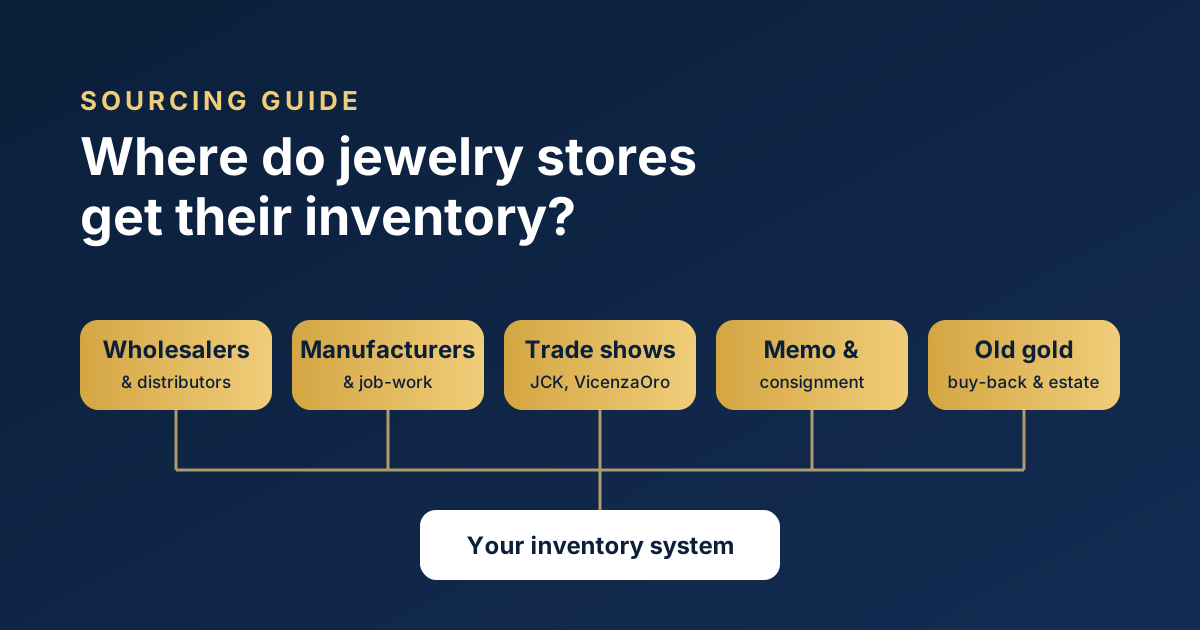
Walk into any jewelry store and you're looking at five different supply chains on one counter. Where do jewelry stores get their inventory? From wholesalers and manufacturers, at trade shows, on memo and consignment from vendors, and — more than most shoppers realize — over their own counter as old gold. Each channel has different economics, different risk, and different bookkeeping. Here's how each one actually works.
1. Wholesalers and distributors
The backbone of most retail stock. Wholesalers buy in volume from manufacturers and importers, then sell to stores in smaller lots — finished gold and silver lines, mounted diamond goods, chains by the meter and findings. Retailers typically hold accounts with several wholesalers, ordering weekly top-ups on fast movers and seasonal buys before wedding and festival peaks. Pricing is usually metal weight at the day's rate plus a making/labour margin, which is why stores track purchases in grams, not just pieces.
2. Manufacturers and job-work
Larger retailers skip a step and buy factory-direct, or send their own metal to manufacturers and karigars (artisans) as job-work — the store supplies gold, the workshop returns finished pieces and charges labour. This gets better margins and exclusive designs, but it means the store's metal is sitting in someone else's workshop, which is exactly what karigar and job-work tracking exists to control.
3. Trade shows and buying trips
Shows like JCK Las Vegas, VicenzaOro, the Hong Kong Jewellery & Gem Fair and India's IIJS are where stores discover new lines and negotiate season buys, often placing orders for delivery months out. Buying trips to manufacturing hubs — Mumbai, Dubai's gold souk, Bangkok, Istanbul — work the same way. Disciplined buyers arrive with sell-through data from last season, not just taste.
4. Memo and consignment
A huge share of showcase stock — especially diamonds and high-value pieces — isn't owned by the store at all. On memo (consignment), a vendor places goods with the retailer; the store pays only when a piece sells and can return the rest. It lets a store show far more inventory than its capital could buy, but every memo piece is a liability the books must track: whose it is, what it's worth, and when it must go back.
5. Over the counter: old gold, buy-backs and estate pieces
Customers are a supply channel too. Old-gold exchange, buy-backs and estate purchases bring metal in at attractive cost — it's melted and recast, refurbished for resale, or sold to refiners. In gold markets from Dubai to Karachi this is a daily flow, and it's why jewelry systems treat old-gold intake as its own stock pool with purity testing at the counter.
| Channel | You own it? | Typical use | The catch |
|---|---|---|---|
| Wholesaler / distributor | Yes | Core lines, weekly restock | Ties up capital; margin shared |
| Manufacturer / job-work | Yes (your metal) | Exclusive designs, better margin | Your gold sits in their workshop |
| Trade shows | Yes | Season buys, new lines | Long lead times; buy on data, not taste |
| Memo / consignment | No — vendor's | Diamonds, high-value showcase depth | Every piece is a tracked liability |
| Old gold / estate | Yes | Cheap metal intake, daily flow | Purity testing and separate stock pool |
The part nobody tells you: sourcing is an accounting problem
Five channels means five kinds of stock sitting in one showcase: owned pieces, your metal at a karigar's bench, memo goods you don't own, old gold awaiting melt, and orders in transit. Stores that blur these pools end up with an on-hand number that's fiction — and memo disputes, karigar shortfalls or missing grams to show for it. Purpose-built jewelry inventory management software keeps each pool separate, tracks every gram by weight and purity, and reconciles memo and wholesale accounts automatically.
“A jewelry store's inventory isn't one pile of stock — it's five supply chains meeting in a showcase. The stores that win are the ones that can tell them apart to the gram.
If you're sourcing through more than one of these channels and still tracking it in a register or spreadsheet, that's the gap to close first. Book a demo and we'll show owned, memo, job-work and old-gold stock managed as separate, reconciled pools — on your own workflow.
Frequently asked questions
Where do jewelry stores get their inventory?
Five main channels: wholesalers and distributors for core lines; manufacturers and karigar job-work for exclusive designs; trade shows like JCK and VicenzaOro for seasonal buys; memo/consignment programs where vendors place goods the store pays for only when sold; and over-the-counter old-gold exchange, buy-backs and estate purchases.
Do jewelry stores own all the jewelry they display?
No. A significant share of showcase stock — especially diamonds and high-value pieces — is held on memo (consignment): the vendor still owns it, the store pays when it sells and returns what doesn't. This lets stores display far more than their capital could buy.
What is memo in the jewelry business?
Memo is the jewelry trade's term for consignment: a supplier places goods with a retailer on a memorandum, the retailer pays only for what sells and returns the rest. Every memo piece must be tracked as vendor property with its weight, value and return terms.
Where do small or new jewelry businesses get inventory?
Usually wholesalers with low minimums, local manufacturers or karigars for made-to-order pieces, and old-gold intake once trust builds. Memo terms typically come later, after suppliers see a payment history. Whatever the channel, tracking stock by weight and piece from day one is what keeps growth from outpacing the books.

Written by AaravJewelry Software Specialist
Aarav is a jewelry software specialist at ZSolTech with a decade in jewellery-trade systems — POS, weight-based inventory, karigar job-work and gold-rate pricing. The buyer's guides and how-tos on this blog draw on implementations for retailers, wholesalers and manufacturers across the US, Gulf and South Asia.
See it on your own data
The fastest way to judge any jewelry software is a demo against your real workflows.
Book a demoKeep reading
Top Jewelry POS Systems: How to Build a Shortlist
We are a vendor, so we will not rank ourselves first. Here is the method buyers use to shortlist a jewelry POS system — and the four tests that separate them.
Read GuideHow to Inventory Jewelry: Numbering, Tracking & a Free Sheet
Tag numbering that cannot collide, the four weights every piece needs, and a stock sheet that reconciles. The method behind a count that balances.
Read