How to Organize & Restock Jewelry Inventory: Best Practices
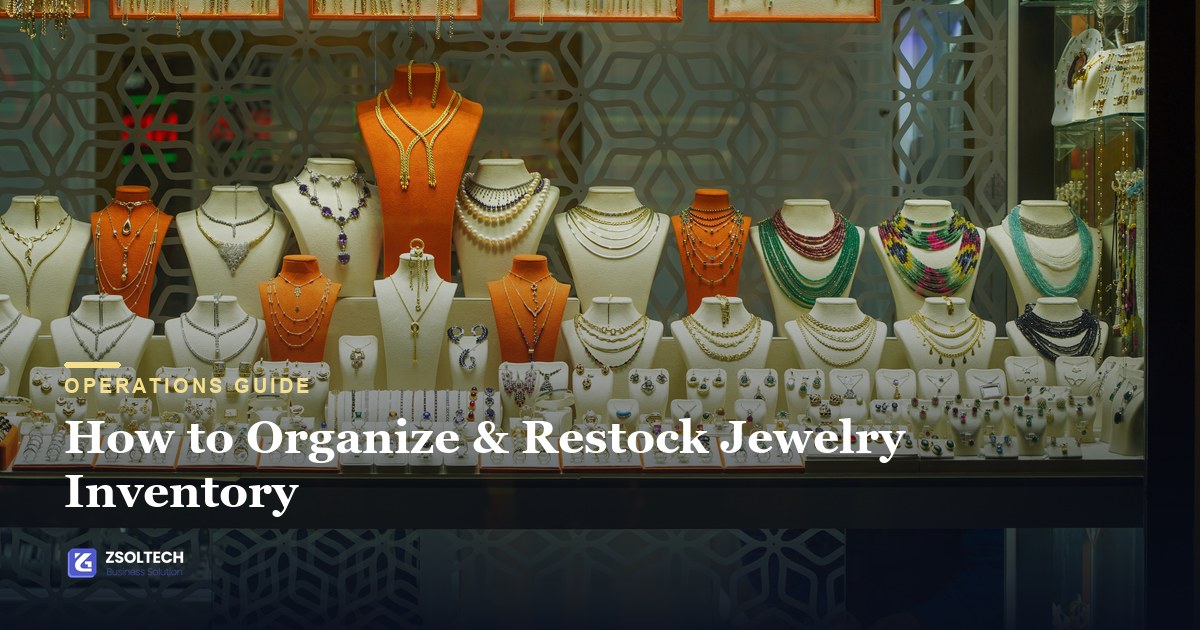
In jewelry, inventory *is* the business — it's your capital sitting in a safe. Organize it well and you turn stock quickly, spot dead lines early and count with confidence. Organize it badly and you tie up cash in slow-movers, lose grams to untraceable shrinkage, and dread every stock take. This guide covers both halves of the job: how to organize jewelry inventory so it's findable and countable, and the best practices for restocking wholesale jewelry inventory so you buy what sells and stop buying what doesn't.
Start with the two ways jewelry is counted
Before you organize anything, accept that every piece exists on two axes at once: as a *piece* (one SKU, one tag) and as *metal and stones* (grams, karat, purity, carats). A generic "quantity on hand" mindset breaks the moment the gold rate moves. Good organization — and good software — tracks both, so a ring is simultaneously one item and, say, 4.2g of 18K plus a 0.30ct diamond. Keep that dual view in mind through everything below.
How to organize jewelry inventory
Organization is what makes stock findable, sellable and countable. Four things do most of the work:
- Categorize by how you sell, not just by metal. Rings, chains, bangles, bridal, loose stones — then sub-divide by karat/purity and by weight band. A logical hierarchy means staff (and reports) find a line in seconds.
- Tag every piece at intake. A barcode or RFID tag carrying SKU, gross/net weight, purity, making charge and price is the single highest-leverage habit in the shop. Nothing enters the safe untagged.
- Give every item a home location. Tray, showcase, drawer or branch — recorded in the system. "I know it's here somewhere" is how grams go missing.
- Separate your stock states. New stock, approval/consignment out with customers, old-gold intake, repair items and workshop WIP are *not* the same pool. Blur them and your on-hand number is fiction.
Jewelry inventory storage that protects value
Physical jewelry inventory storage isn't just security — it's part of the counting system. A few principles:
- Store to match your categories. If the system groups by category and karat, the trays should too. Physical and digital layout mirroring each other turns a stock take from a hunt into a scan.
- Anti-tarnish and separation for silver and set pieces. Individual pouches or lined trays prevent scratching and tarnish that quietly erodes tag price.
- High-value and loose stones under tighter control. Diamonds, certificates and loose stones belong in their own secured, logged location with restricted access.
- Label the storage, not just the item. A tray with its own ID that the system knows lets you count by location and reconcile fast.
How to store jewelry inventory properly, by material
Storage that ignores the metal quietly erodes the value on the tag. A few material-specific rules every stockroom should follow:
- Sterling silver: the fastest to tarnish. Anti-tarnish strips or treated pouches, low humidity, and never loose in a shared tray with rubber or newspaper — both accelerate tarnish.
- Gold: doesn't tarnish, but scratches. Individual compartments or soft pouches per piece; heavier karat pieces separated from harder stones that can mark them.
- Fine and high-value pieces: individual boxes or pouches inside a secured, logged safe location — with certificates stored alongside and recorded in the system.
- Costume and fashion stock: the plating wears fastest — keep it dry, sealed and away from direct light, and rotate it forward before the finish dates it.
Restocking: buy what sells, not what you fell in love with
This is where wholesale jewelers win or lose margin. Best practices for restocking wholesale jewelry inventory all come down to replacing proven sellers on time while refusing to over-buy the rest:
- Set reorder points by line, not gut feel. For each fast-moving category, define a minimum stock/weight level that triggers a buy — based on real sell-through, not last season's optimism.
- Run FSN (Fast / Slow / Non-moving) analysis every cycle. Restock the Fast, discount or transfer the Slow, and stop re-buying the Non-moving. This one report decides most of your open-to-buy.
- Account for supplier lead times. If a caster takes three weeks, your reorder point has to cover three weeks of sales plus a buffer — or you'll stock out on your best line.
- Buy to seasons and events. Bridal, festival and gifting peaks are predictable; let last year's dated sales data — not a rep's pitch — size the pre-season buy.
- Watch metal weight, not just piece count. "Restock 20 chains" means little; "replace 180g of 22K light chain" is a real, cash-controlled instruction.
- Feed old-gold and buy-back into the plan. Metal coming back over the counter is restock you already own — melt/recast it before buying new grams.
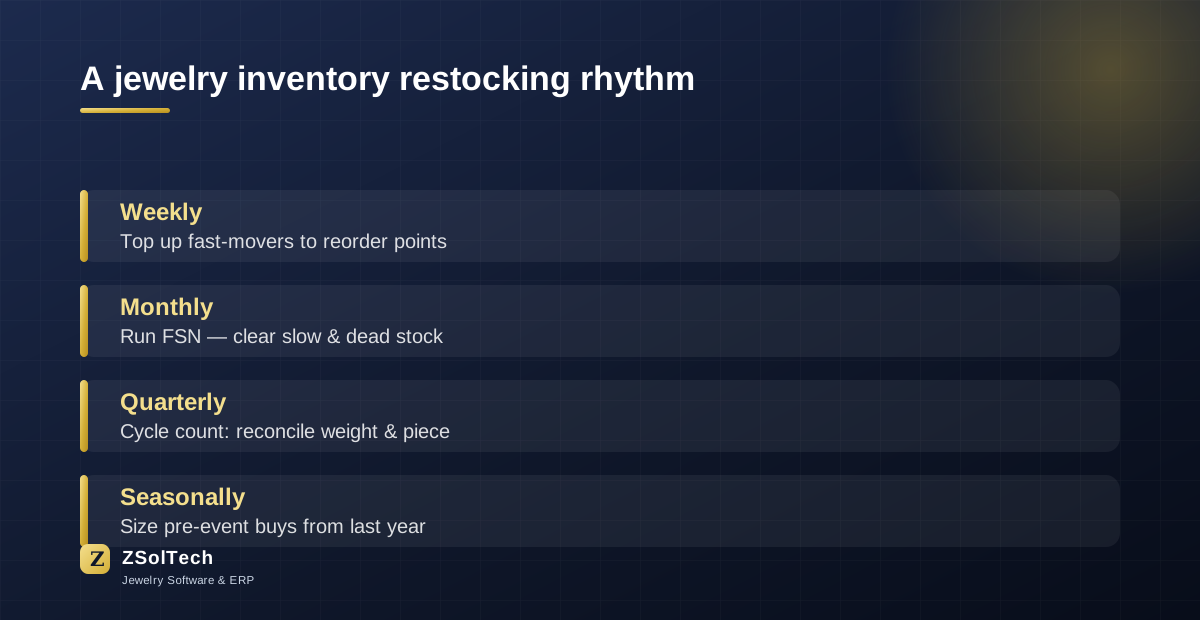
A simple restocking rhythm
| Frequency | What you do | What it prevents |
|---|---|---|
| Weekly | Review fast-movers against reorder points; place top-up buys | Stocking out on bestsellers |
| Monthly | Run FSN; flag slow/dead stock for discount or transfer | Cash frozen in non-movers |
| Quarterly | Cycle count by category/location; reconcile weight & piece | Untraceable shrinkage |
| Seasonally | Size pre-event buys from last year's data | Over- or under-buying peaks |
Count discipline: the habit that keeps it honest
Organization and restocking only stay true if you count regularly. Annual stock takes are too coarse for gold. Cycle counting — counting one category or location on a rotation so the whole shop is covered over a quarter — catches discrepancies while they're small and traceable. With barcode/RFID and a location-aware system, a category count is minutes, not hours — our guide to RFID jewelry tags and tracking covers how tray-speed counting works. Every count should reconcile *both* piece and weight, with reasoned adjustments and an audit trail, so shrinkage stops being a mystery line in the accounts.
“Well-run jewelry inventory isn't the shop with the most stock — it's the shop that knows exactly what it has, where it is, and which grams are earning their place in the safe.
Doing this by hand vs. letting the system do it
You can run all of the above on spreadsheets and discipline — many jewelers start there. But reorder points, FSN analysis, weight-and-piece reconciliation and location tracking are exactly the things software does tirelessly and people forget under pressure. Purpose-built jewelry inventory management software tags stock by weight and piece, revalues it at the live gold rate, runs FSN and stock takes for you, and ties restocking to real sell-through — turning these best practices from a plan you *intend* to follow into a system that follows them automatically.
If organizing and restocking your stock has become a monthly fire drill, the fastest way to fix it is to see it running on your own inventory. Book a demo and we'll show weight-and-piece tracking, FSN and reorder logic on your real lines.
Frequently asked questions
What is the best way to organize jewelry inventory?
Categorize by how you sell (rings, chains, bridal), then by karat/purity and weight band; tag every piece at intake with a barcode or RFID tag carrying SKU, weight, purity and price; give every item a recorded home location (tray, showcase, branch); and keep stock states separate — new stock, consignment out, old-gold intake, repairs and workshop WIP are different pools.
How do jewelers keep track of inventory?
Well-run jewelers track every piece on two axes at once: as a piece (one SKU, one tag) and as metal and stones (grams, karat, carats). Barcode or RFID tags make each piece scannable, a location system records where it sits, and regular cycle counts reconcile both piece count and weight against the books.
How often should jewelry inventory be counted?
Annual stock takes are too coarse for gold. Cycle counting — one category or location on a rotation so the whole shop is covered each quarter — catches discrepancies while they're small. With RFID, a category count takes minutes, making weekly counts practical.
When should a jewelry business restock?
Set reorder points per line based on real sell-through and supplier lead times, review fast-movers weekly, run FSN (Fast/Slow/Non-moving) analysis monthly to stop re-buying dead lines, and size seasonal buys from last year's dated sales data — in weight, not just piece count.
Do I need software to manage jewelry inventory?
You can start with spreadsheets, but reorder points, FSN analysis, weight-and-piece reconciliation and location tracking are exactly what people forget under pressure and software does automatically. Purpose-built jewelry inventory software also revalues stock at the live gold rate — something a spreadsheet can't do reliably.
What's the best way to store jewelry inventory?
Match physical storage to your system's categories so counting is a scan, not a hunt: labeled trays mirroring your category/karat hierarchy, anti-tarnish pouches for silver, individual compartments for gold so pieces don't scratch, and high-value items and certificates in a secured, logged safe location recorded in the system.
Is there a free jewelry inventory spreadsheet?
Yes — ZSolTech publishes a free downloadable jewelry inventory template (CSV) plus a free-forever starter plan for small jewelers on its free jewelry inventory software page. A spreadsheet works to start; move to software once you need live gold-rate valuation, barcode/RFID counting or more than one person editing stock.

Written by AaravJewelry Software Specialist
Aarav is a jewelry software specialist at ZSolTech with a decade in jewellery-trade systems — POS, weight-based inventory, karigar job-work and gold-rate pricing. The buyer's guides and how-tos on this blog draw on implementations for retailers, wholesalers and manufacturers across the US, Gulf and South Asia.
See it on your own data
The fastest way to judge any jewelry software is a demo against your real workflows.
Book a demoKeep reading
Top Jewelry POS Systems: How to Build a Shortlist
We are a vendor, so we will not rank ourselves first. Here is the method buyers use to shortlist a jewelry POS system — and the four tests that separate them.
Read GuideHow to Inventory Jewelry: Numbering, Tracking & a Free Sheet
Tag numbering that cannot collide, the four weights every piece needs, and a stock sheet that reconciles. The method behind a count that balances.
Read